
10 Wheel Luggage Buying Tips for Global Buyers
Choosing Wheel Luggage is about more than counting wheels. A crowded terminal, a rough curb, and a fully packed suitcase can reveal weaknesses quickly. Buyers need to compare wheel construction, handle stability, shell materials, storage, repair options, and tested weight—not just appearance.
SITA’s 2024 Baggage IT Insights report recorded 6.9 mishandled bags per 1,000 passengers in 2023, down from 7.6 in 2022. This figure describes airline baggage performance, not suitcase durability. Still, it underlines why dependable handling and practical identification features matter during busy journeys. The report offers industry context, not a product endorsement.
Details count. Do the wheels swivel without catching? Does the handle wobble when the case is pulled across uneven pavement? Can a replacement wheel be sourced? Small checks can prevent costly frustration. They are easy to overlook.
SITA CEO David Lavorel is a relevant industry voice on baggage operations, but an operations report cannot establish what makes one suitcase better than another. A direct quotation from a Wheel Luggage product expert should be verified against its original source before publication; inventing one would weaken buyer trust. This guide therefore focuses on ten practical checks that global buyers can apply across brands and markets. Some trade-offs remain: lighter cases may use less robust components, while larger wheels can take up valuable packing space. The right choice depends on the routes, loads, and handling conditions a buyer actually expects.
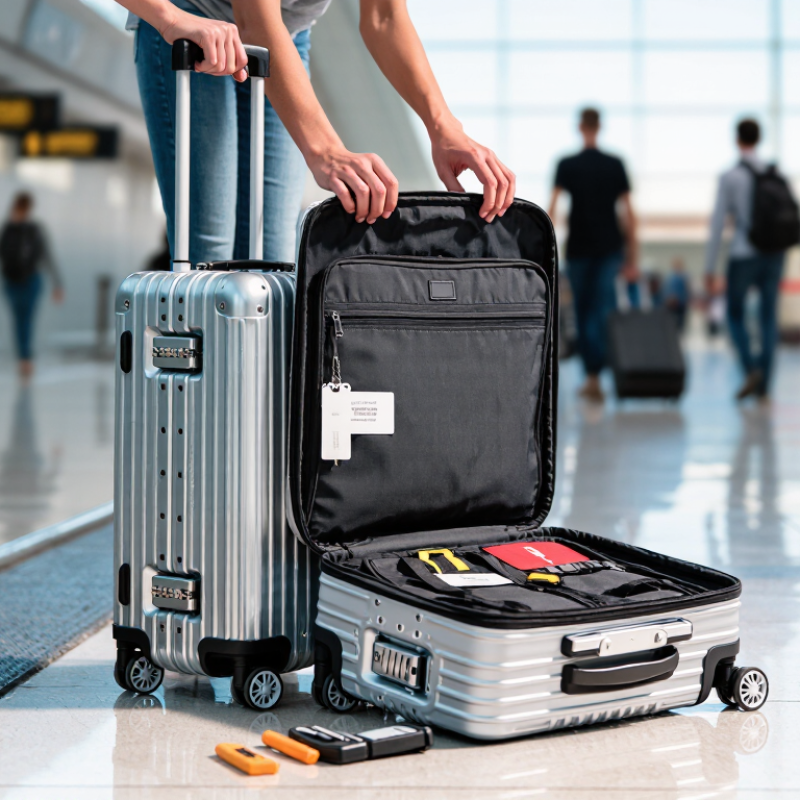
Understanding 10-Wheel Luggage and Its Main Advantages
Ten-wheel luggage usually has five sets of paired wheels, though the layout can vary by case. The extra contact points are designed to spread weight and help the suitcase roll upright. On a smooth airport floor, it can glide beside you with less effort than a two-wheel case. That matters.
The main advantage is easy movement in several directions. Paired spinner wheels generally allow forward, sideways, and turning movement without tilting the case. This is useful in crowded check-in lines, narrow hotel corridors, and tight spaces near a train seat. A well-balanced suitcase can also feel steadier when you pause, rather than tipping over with a small shift in contents. Wheel quality, alignment, and the case’s load still affect how it handles.
More wheels are not automatically better. Ten wheels can add parts and weight, and small rollers may struggle on rough pavement, thick carpet, or uneven curb cuts. Not everywhere. Before buying, check whether each wheel turns freely and sits firmly in its housing. Push the case across tile, then try a slightly rougher surface if possible. Pay attention to rattling, resistance, and whether the suitcase tracks straight. These small checks offer a clearer picture than wheel count alone.
10 Wheel Luggage Buying Tips for Global Buyers - Understanding 10-Wheel Luggage and Its Main Advantages
| Buying tip | What to inspect | Practical guide | Potential advantage | Before you buy |
|---|---|---|---|---|
| 1. Understand the wheel configuration | Check whether “10 wheels” means five twin-wheel spinner assemblies. | Wheel-count terminology is not fully standardized. Confirm the number of wheel assemblies as well as the number of individual wheels. | Twin-wheel assemblies can provide a broader rolling base than single-wheel designs. | Look at product photos and specifications; ask how each wheel assembly is constructed. |
| 2. Test rolling and maneuverability | Roll the case forward, backward, and sideways on a smooth floor. | Spinner wheels are designed to turn in multiple directions, but steering feel depends on wheel quality, alignment, and load. | Multi-directional movement can make it easier to guide luggage through queues and crowded terminals. | Check for wobbling, dragging, uneven turning, or excessive noise. |
| 3. Check wheel attachment and clearance | Inspect the wheel housings, fasteners, and space between the wheels and case. | Wheel assemblies should be firmly attached, with enough clearance to rotate without rubbing against the shell. | Secure, freely rotating wheels help maintain predictable handling. | Ask whether wheels or wheel housings can be replaced if damaged. |
| 4. Consider your usual surfaces | Think about polished floors, pavement, paving joints, and other routes you use. | Small spinner wheels generally roll best on smooth surfaces and may be less convenient on rough ground or deep carpet. | Choosing wheels suited to your route can make everyday movement easier. | If possible, test the packed case on a surface similar to the ones you travel across. |
| 5. Compare case size with airline rules | Measure the outside dimensions, including wheels and handles. | Carry-on size and weight limits vary by airline, route, and fare. There is no single global cabin-bag limit. | A well-matched size can help reduce the risk of having to check the bag unexpectedly. | Check the current rules of every airline on your itinerary before selecting a carry-on. |
| 6. Balance capacity and empty weight | Compare the stated volume and the case’s empty weight. | More capacity can mean more packing space, but a heavier empty case leaves less of a weight allowance for belongings. | A suitable balance helps make the luggage practical for your trip length and baggage limits. | Compare specifications using the same units and check whether listed capacity is approximate. |
| 7. Choose shell or fabric for your needs | Review the material, construction, and care instructions. | Hard-shell and soft-sided cases differ in flexibility, exterior pockets, and how they respond to impacts; performance varies by construction. | The right style can better match your packing habits and the items you carry. | Inspect seams, zippers, corners, and the shell or fabric for visible weak points. |
| 8. Check the handle system | Extend and retract the telescopic handle and test the carry handles. | The handle should lock at its available positions and move without sticking; some movement in an extended handle can be normal. | A comfortable, stable handle can improve control while rolling the case. | Test it at different heights and check that the grip feels comfortable for the intended user. |
| 9. Review packing and security features | Look at dividers, compression straps, zippers, and any lock provisions. | Built-in locks and zipper designs differ. Where a lock is included, confirm its operating instructions and suitability for your route. | Useful interior organization can help separate items and keep contents in place. | Check that compartments are accessible and that the zipper runs smoothly around the case. |
| 10. Compare warranty and repair support | Read the warranty terms and ask about replacement parts and service access. | Coverage, exclusions, and repair options differ between sellers and destinations. | Accessible support can make it easier to address wear or damage during the luggage’s useful life. | Keep the receipt and verify how to request service in the country where you plan to use the case. |
Note: “10-wheel luggage” commonly describes a case with five twin-wheel spinner assemblies, but product terminology varies. Confirm the actual wheel layout and check current airline baggage requirements before purchasing.


