
top of page

What Are the Top Custom Table Legs for Global Buyers?

Global buyers are no longer choosing table legs by appearance alone. Custom Table Legs must support design, stability, shipping efficiency, and long-term use. A sculptural steel base may look impressive, but its weld quality, floor contact, and load capacity matter more in daily service.

Dieter Rams, a leading industrial and furniture design authority, said, “Good design is as little design as possible.” That principle remains useful when comparing tapered legs, pedestal bases, folding frames, and height-adjustable systems. The best option depends on the tabletop size, material, installation method, and expected environment. A dining table for a humid coastal home needs different protection than a dry office interior. Small details matter.

Check them carefully.

Experienced buyers often request steel thickness, alloy information, finish samples, mounting plates, and tested load data before ordering. They also compare packaging quality, replacement availability, and production consistency across batches. These practical checks can prevent wobbling, scratched finishes, and expensive installation delays.

Still, no single leg style is perfect for every market. A heavy cast-iron base may offer excellent stability, yet increase freight costs. A lightweight aluminum design may simplify shipping, but require stronger engineering around the joints. This trade-off deserves honest attention. Suppliers should provide clear drawings, realistic lead times, and responsive technical support. Buyers should question vague claims and inspect physical samples whenever possible.

This guide examines the top Custom Table Legs for global buyers, focusing on performance, appearance, customization, and dependable sourcing. Some choices may look less dramatic. They may perform better.
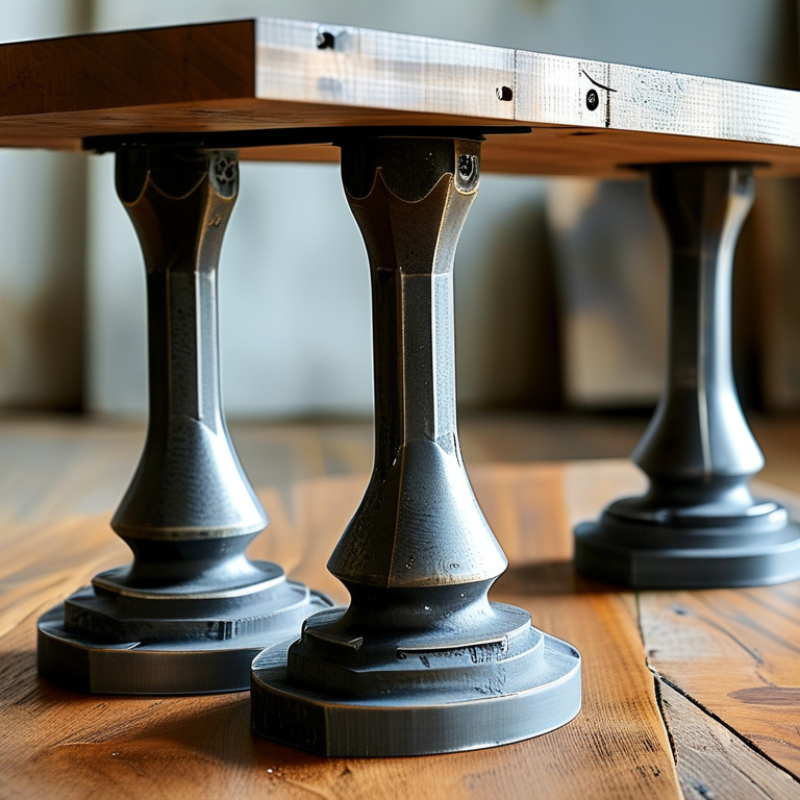
What Are the Top Custom Table Legs for Global Buyers?

What Are Custom Table Legs and Why Do Global Buyers Choose Them?

Custom table legs are supports made to match a buyer’s specific table design. They can differ in height, width, shape, material, finish, and mounting method. Common options include steel, aluminum, solid wood, and adjustable structures. A buyer may request a 720-millimeter dining height, concealed plates, or a matte powder-coated surface. Small details matter.

Global buyers choose custom table legs when standard parts create design or production problems. A restaurant may need stronger supports for heavy stone tops. A furniture maker may require exact drilling positions for faster assembly. Adjustable feet can help tables remain stable on uneven floors. I have found that accurate drawings and physical samples prevent expensive misunderstandings. Sometimes, buyers focus too much on appearance. That assumption is not always right.

Professional sourcing also requires checking load capacity, weld quality, surface treatment, packaging, and corrosion resistance. These points affect safety, delivery performance, and long-term maintenance. Suppliers should confirm dimensions in writing and explain tolerance ranges clearly. International buyers also consider container space, installation tools, and replacement parts. A compact knock-down design may reduce freight volume. Yet it can add assembly steps. That trade-off deserves careful testing before mass production. A practical trial may reveal loose screws, sharp edges, or an unstable connection. Those findings are inconvenient, but they improve the final product.

Which Materials Are Best for Custom Table Legs?

For global buyers, steel, aluminum, and responsibly sourced wood remain the strongest materials for custom table legs. The right choice depends on load, climate, design, and shipping conditions.

Steel provides excellent stiffness for dining tables, workstations, and hospitality furniture. World Steel Association data recorded about 1.89 billion tonnes of crude steel production in 2023, showing its deep industrial availability. That supply can support stable sourcing and replacement orders.

However, steel legs may rust in humid rooms without proper powder coating or plating. A glossy finish also reveals scratches quickly.

Aluminum is lighter and naturally resistant to corrosion. International Aluminium Institute statistics show global primary aluminum production reached approximately 70.6 million tonnes in 2023. This makes aluminum practical for movable tables and export projects where shipping weight matters.

It costs more than basic steel in many markets. Strength can also vary with alloy and tube design. Light does not always mean weak.

Solid wood creates warmth, while engineered wood can improve dimensional consistency. FAO forestry data reported global roundwood production above 3.9 billion cubic meters in 2022, indicating broad material availability.

Buyers should request moisture content, species details, and joint testing. Wood can swell or shrink after shipment.

I have seen attractive legs fail because the finish looked excellent, but the grain direction was ignored.

A better specification includes load testing, concealed fasteners, and samples tested in the destination climate. No material wins every project.

How Do Design, Size, and Load Capacity Affect Selection?

What Are the Top Custom Table Legs for Global Buyers?

Custom table legs are selected by more than appearance. Design, size, and load capacity must work together. A slim steel leg may suit a minimalist desk, but it can feel unstable under a thick stone top. Tapered wooden legs add warmth, while powder-coated metal supports frequent commercial use. Material choice affects stiffness, weight, corrosion resistance, and maintenance. Small details matter.

Measure the tabletop before choosing the leg shape. A 120-centimeter dining table may need wider support spacing than a compact side table. Leg height should also match the intended use. Dining tables commonly require comfortable knee clearance, while workbenches need extra stability.

Uneven floors can expose weak designs quickly. Adjustable feet help, but they do not fix poor structure.

Load capacity should include the tabletop, equipment, and occasional pressure from users. Do not rely only on a advertised maximum. Ask whether the rating applies to one leg, a complete set, or a tested installation. Connection plates, screws, welds, and the tabletop material all change performance. A conservative safety margin is practical. Still, too much steel can make assembly difficult and shipping expensive.

I have seen attractive legs fail because the mounting plate was too small. That mistake is easy to miss.

Buyers should request drawings, dimensions, finish details, and test information before production. Requirements may also vary by destination, so local product and installation rules deserve checking.

What Customization Options Suit Different Table Styles?

What Are the Top Custom Table Legs for Global Buyers?

What Customization Options Suit Different Table Styles?

Custom table legs should match the table’s visual weight, use, and setting. I have found that dining tables often need wider steel or hardwood legs for steady daily support. Slim angled legs suit minimalist desks, while central pedestal bases leave more room for chairs. For farmhouse tables, textured finishes and visible joinery can add warmth. Round legs soften compact café tables. Square profiles create a sharper, architectural appearance.

Buyers can customize height, width, tube diameter, mounting plates, feet, colors, and surface finishes. Powder coating works well for durable color control. Brushed metal creates a practical industrial effect. Natural wood allows staining, edge shaping, and grain selection. Always confirm floor protection, load capacity, welding quality, and mounting-hole positions before production. A small mismatch can make installation frustrating. I have seen attractive legs fail because the base was too narrow for the tabletop.

Tips: Send accurate drawings, tabletop thickness, and intended load. Request finish samples and a pre-production dimensional check. Consider packaging for long-distance shipping. Corners need strong protection. Tolerances also matter, although they are often overlooked. A leg that is only a few millimeters uneven can wobble on a hard floor. When uncertain, test one sample with the actual tabletop before ordering in larger quantities.

Top Custom Table Legs for Global Buyers

Customization suitability by table style, rated from 1 to 10 according to stability, visual compatibility, load support, and installation flexibility.

Steel legs provide strong all-purpose performance for dining tables, desks, coffee tables, and bar tables. Solid wood legs suit warm, traditional, and premium interiors, while cast iron works especially well with industrial or heavy-duty designs. Aluminum is a practical lightweight option, and hairpin legs are most suitable for compact, modern, and mid-century styles.

How Can Global Buyers Evaluate Suppliers and Shipping Terms?

For global buyers, custom table legs should be judged beyond appearance. Start with the supplier’s technical control. Ask for drawings showing height, tube thickness, mounting holes, weld points, and weight capacity. Request material details, coating standards, and sample approval before mass production. A reliable supplier should explain tolerances clearly. Vague answers deserve caution.

Evaluate production evidence, not only catalog photographs. Review factory inspection records, material certificates, and recent quality reports. Ask how defects are recorded and corrected. Check whether the supplier can repeat the same finish across different batches.

A small sample can reveal uneven powder coating, weak welds, or poorly aligned plates. It is easy to underestimate packaging damage. I have learned that attractive samples do not guarantee consistent production.

Shipping terms need equal attention. Confirm the exact Incoterm, delivery port, lead time, and responsibility for insurance. Compare the full landed cost, including freight, duties, local handling, and customs documentation. Ask for carton dimensions, gross weight, pallet details, and loading photos. Strong packaging matters when steel legs cross several borders.

Payment milestones should connect with inspections, not promises alone. A written tolerance for delays is useful. Still, forecasts can be wrong. Port congestion, seasonal demand, and revised customs requirements may change the schedule. Keep communication records, approve every specification in writing, and leave room for one unpleasant surprise.

S O C I A L 

  • Facebook
  • Instagram
  • Pinterest

©2022 by LaFata Cabinets. Proudly created with Wix.com

bottom of page