
top of page

China Top Porcelain Floor Tile Suppliers How to Choose?

Choosing among China’s top porcelain floor tile suppliers requires more than comparing attractive catalog photos. A reliable decision begins with clear project requirements. Define the tile size, surface finish, color range, wear rating, water absorption, and expected installation environment. A bathroom, hotel lobby, and outdoor terrace demand different technical performance. The right Porcelain Floor tile should match the project, not merely the supplier’s best-selling collection.

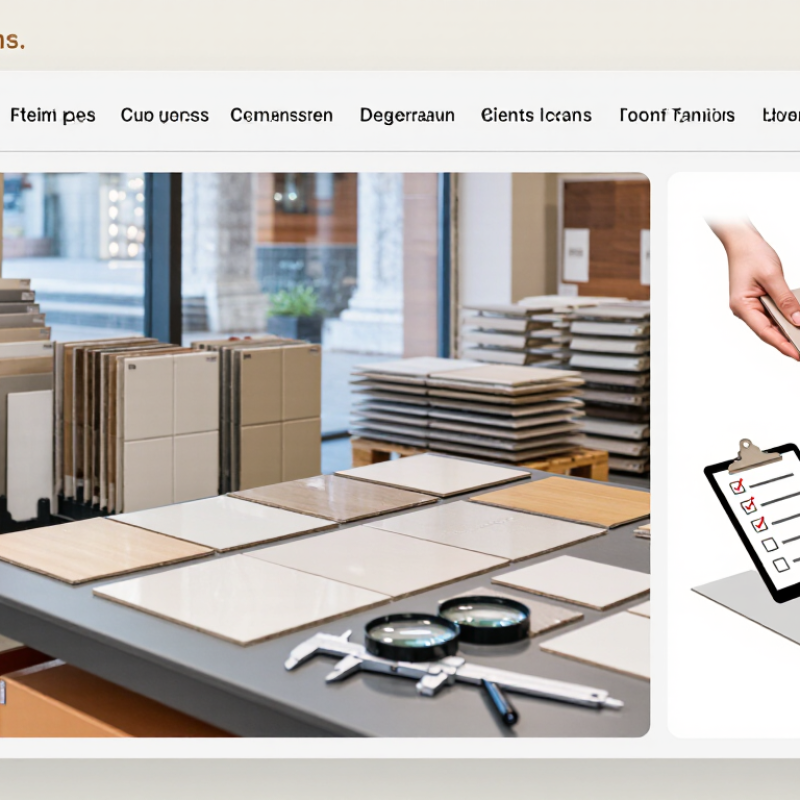
Experienced buyers usually request physical samples before approving bulk production. Inspect the glaze under daylight, check edge straightness, compare shade consistency, and measure several pieces. Ask for test reports, product specifications, factory quality procedures, and relevant certifications. A professional supplier should explain these details without avoiding difficult questions. Factory visits, third-party inspections, and documented production records can provide stronger evidence than polished sales presentations. Still, paperwork has limits. A perfect report cannot guarantee every carton will arrive perfectly.

Pricing also needs careful review. Compare packaging, pallet strength, loading methods, minimum order quantities, replacement policies, production schedules, and shipping terms. A low quotation may hide weak cartons or costly delays. Request a written sample approval process and confirm how shade variation will be controlled. Communication matters. Slow replies during sampling may become serious problems during production. No supplier is flawless. Even experienced manufacturers can face color differences, damaged pieces, or schedule changes. The goal is not unrealistic perfection. It is choosing a transparent partner with measurable standards, practical experience, and a dependable response when something goes wrong. This guide examines the factors that separate credible Chinese suppliers from attractive but uncertain options.
China Top Porcelain Floor Tile Suppliers How to Choose?

Porcelain Tile Basics: Water Absorption ≤0.5% Under ISO 13006

China Top Porcelain Floor Tile Suppliers: How to Choose?

Porcelain tile begins with water absorption, not appearance. ISO 13006 classifies porcelain tiles as BIa when absorption is 0.5% or lower. This threshold supports better frost resistance and dimensional stability. It does not guarantee perfect installation. According to the European Commission’s JRC ceramic manufacturing reference document, firing temperature and kiln control strongly influence tile performance. Ask suppliers for recent laboratory results, not only catalog claims.

A reliable supplier should provide test reports for each production series. Check water absorption, breaking strength, slip resistance, and surface wear. Compare the report date with the shipment date. A beautiful sample can hide batch variation. It happens.

The Ceramic Tile Institute and ISO testing procedures emphasize controlled sampling and consistent test conditions. Therefore, request sealed samples from the intended batch. Measure thickness at several points. Inspect the rear surface for warping, cracks, or uneven ribs. A supplier with technical staff should explain test methods clearly. They should also identify the laboratory and testing standard.

China’s large manufacturing base offers many choices, but low price can reflect weaker quality control. Review factory experience, kiln capacity, inspection records, and export documentation. Do not rely on absorption alone. A tile below 0.5% may still perform poorly if installation, adhesive coverage, or joint design is neglected. That is the uncomfortable part. A careful buyer checks the tile, the data, and the process behind both.

Supplier Quality Checks: Verify ISO 9001, Test Reports, and PEI Ratings

When choosing a porcelain floor tile supplier, verify quality before comparing prices. Request a current ISO 9001 certificate and inspect its details carefully. Check the issuing organization, certificate number, validity period, and registered factory address. The certificate should cover tile manufacturing, not an unrelated business activity. ISO 9001 shows controlled processes, but it does not guarantee perfect tiles.

Ask for recent test reports from an independent laboratory. The report should identify the exact tile series, production batch, and testing date. Review water absorption, breaking strength, slip resistance, stain resistance, and dimensional tolerance. Compare these results with your project requirements and local building standards. A glossy report means little if the tested sample differs from your shipment.

PEI ratings deserve careful attention. For glazed tiles, the rating indicates resistance to surface wear under specific conditions. Choose a suitable level for bedrooms, retail floors, hotel entrances, or other traffic areas. PEI cannot measure every risk, including impact damage or poor installation.

Order physical samples and inspect edges, flatness, shade variation, and carton labels. Keep a sample from the approved batch for later comparison. It is easy to overtrust documents. I have learned that small checks, repeated consistently, often reveal more than impressive paperwork.

Product Selection: Compare Tile Sizes, Slip Resistance, and Thickness

China Top Porcelain Floor Tile Suppliers: How to Choose

When comparing porcelain floor tile suppliers in China, study the product before trusting sales language. Request technical sheets, batch information, and independent test reports. For porcelain tile, water absorption should generally remain at or below 0.5% under recognized standards. This supports durability, but it does not guarantee safe flooring. Check whether the test method matches your project and local requirements.

Tile size changes both appearance and installation risk. Large formats create fewer grout lines, yet they need a very flat substrate and careful handling. A 600×600 mm tile may suit a small bathroom, while larger tiles can make an open lobby feel calmer. Measure doorways, drains, and expansion areas before ordering. Do not forget replacement access.

Slip resistance needs practical testing. Request wet-surface performance data for kitchens, entrances, and shower areas. Test it wet. A polished surface may look elegant, but water can make it unsuitable for busy floors.

Thickness also deserves comparison. Thicker tiles can tolerate heavier service, but greater thickness may require adjusted thresholds and adhesive coverage. More is not always better. A supplier should explain tolerances, calibration, shade variation, and quality-control procedures clearly. One assumption deserves doubt: the cheapest sample may not represent the next production batch. Ask for samples from current stock, then inspect them under strong and natural light.

Cost Evaluation: Assess EXW Prices, MOQ, Lead Times, and 10% Waste

When comparing China’s porcelain floor tile suppliers, EXW price is only the starting point. Under EXW, the buyer normally manages inland transport, export handling, freight, insurance, and import clearance. A tile priced at USD 8 per square meter may become USD 11 after these charges. Request a complete cost sheet, not a factory quotation alone.

MOQ also affects cash flow. If a supplier requires 1,000 square meters and your project needs 620, the extra stock ties up money and storage space. Check whether the MOQ applies per color, size, or container. Lead time deserves equal attention. The World Bank’s 2023 Logistics Performance Index gave China a logistics score of 3.7 out of 5, ranking it 19th globally. Strong logistics help, but port congestion and production queues still create delays. Ask for separate dates for sample approval, production, inspection, and dispatch.

Add a 10% waste allowance to the usable area. For a 620-square-meter project, that means ordering about 682 square meters. Complex layouts, diagonal cuts, breakage, and future repairs can consume more. I once treated 10% as a fixed rule; that was too simple. Large-format tiles may need a higher allowance, while repetitive layouts may need less. Compare suppliers using landed cost per usable square meter, including excess cartons and delayed installation. The cheapest EXW offer may not be the lowest project cost.

China Top Porcelain Floor Tile Suppliers: How to Choose? – Cost Evaluation
Supplier Profile Typical Product Specification EXW Price Range
(USD/m²)
Reference EXW Price
(USD/m²)
Minimum Order Quantity
(m²)
Standard Lead Time
(Days)
10% Waste-Adjusted Quantity
for 100 m²
Material Cost After 10% Waste
(USD)
Approximate Cost per Installed m²
Before Freight
Cost Evaluation
Profile A: Standard Production Line 600 × 600 mm, matte glazed porcelain, PEI 4, rectified edge $7.00–$9.50 $8.20 500 15–20 110 m² $902 $9.02/m²
Profile B: Mid-Range Export Line 600 × 1200 mm, full-body porcelain, matte finish, rectified edge $9.50–$13.50 $11.40 800 20–28 110 m² $1,254 $12.54/m²
Profile C: Large-Format Production Line 750 × 1500 mm, polished porcelain slab, rectified edge $13.00–$18.00 $15.60 1,000 25–35 110 m² $1,716 $17.16/m² Higher handling and breakage risk; confirm packaging requirements.
Profile D: Technical Heavy-Duty Line 600 × 600 mm, unglazed full-body porcelain, R10 slip rating, PEI 5 $10.50–$15.00 $12.80 600 20–30 110 m² $1,408 $14.08/m²
Profile E: Premium Decorative Line 600 × 1200 mm, marble-look glazed porcelain, polished finish, rectified edge $14.00–$22.00 $18.00 800 25–40 110 m² $1,980 $19.80/m² Premium appearance; check shade consistency and batch availability.
Profile F: Outdoor Anti-Slip Line 600 × 600 mm, unglazed porcelain paver, R11 slip rating, 20 mm thickness $16.00–$24.00 $19.50 500 25–35 110 m² $2,145 $21.45/m² Appropriate for outdoor use; higher weight increases freight and handling costs.
Calculation basis: Material cost after 10% waste = reference EXW price × 110 m². The figures exclude inland transport, export documentation, ocean freight, insurance, import duties, taxes, unloading, installation, adhesive, grout, and trims. EXW prices are indicative market ranges for common porcelain tile specifications and should be confirmed with current quotations, test reports, packing details, and production schedules.

Supplier Qualification: Audit Capacity, Export Records, and After-Sales Support

China Top Porcelain Floor Tile Suppliers: How to Choose?

A practical supplier audit should begin at the factory, not in a polished showroom. Check production lines, kiln capacity, storage areas, and quality-control records. Ask how many square meters the factory produces monthly. Compare that figure with the supplier’s promised delivery volume. Look beyond photographs. Records matter.

Review export documents from recent shipments. Look for destination markets, product descriptions, loading dates, and recurring buyers where legally available. Consistent records show operational experience, but they do not guarantee every shipment will be perfect. Request references for similar tile sizes, finishes, and packaging standards. A supplier with export experience should explain customs documents and container loading procedures clearly.

After-sales support needs equal attention. Ask for a written process covering shade variation, breakage, incorrect quantities, and installation-related complaints. Confirm response times and evidence requirements, such as photos, batch numbers, and inspection reports. Test communication before placing a large order. Send detailed questions and note whether answers are specific or copied.

A small sample order can reveal more than a long presentation. Check flatness, water absorption documents, edge quality, carton strength, and color consistency. Keep samples from each batch for comparison. One weakness remains: factory audits capture a single moment. Staff, equipment, or materials may change later. Schedule pre-shipment inspections and keep agreed specifications signed. That extra step may feel slow, but it protects project schedules and buyer trust.

S O C I A L 

  • Facebook
  • Instagram
  • Pinterest

©2022 by LaFata Cabinets. Proudly created with Wix.com

bottom of page