
top of page

How to Choose the Best Bedside Carpet in 2026?

Choosing the best Bedside Carpet in 2026 requires more than matching a bedroom’s color palette. The carpet must feel comfortable under bare feet, fit beneath furniture safely, and support healthier daily routines. A thick pile may feel luxurious beside a bed, yet it can trap dust and create a trip hazard. A low-pile design may clean easily, but it can feel less soft on cold mornings. Small details matter.

Market data shows why careful selection is increasingly relevant. Grand View Research valued the global carpets and rugs market at approximately USD 72.39 billion in 2023. Its report projects a 4.1% compound annual growth rate from 2024 to 2030. Allied Market Research gives different figures because its category scope differs. It projected the global carpet market to reach USD 73.9 billion by 2031. The numbers are not perfectly comparable. That is worth remembering.

Interior designer Bobby Berk has described rugs as “the foundation of any room.” This idea applies strongly beside the bed, where texture, scale, and placement affect the first step of every morning. In this guide, we examine fiber types, backing, pile height, cleaning needs, room dimensions, and responsible material choices. We will also question popular assumptions. A natural fiber is not automatically the best option. Nor is a higher price proof of better performance. The ideal Bedside Carpet should suit your feet, floor, cleaning habits, and household reality. In short, comfort must meet evidence.
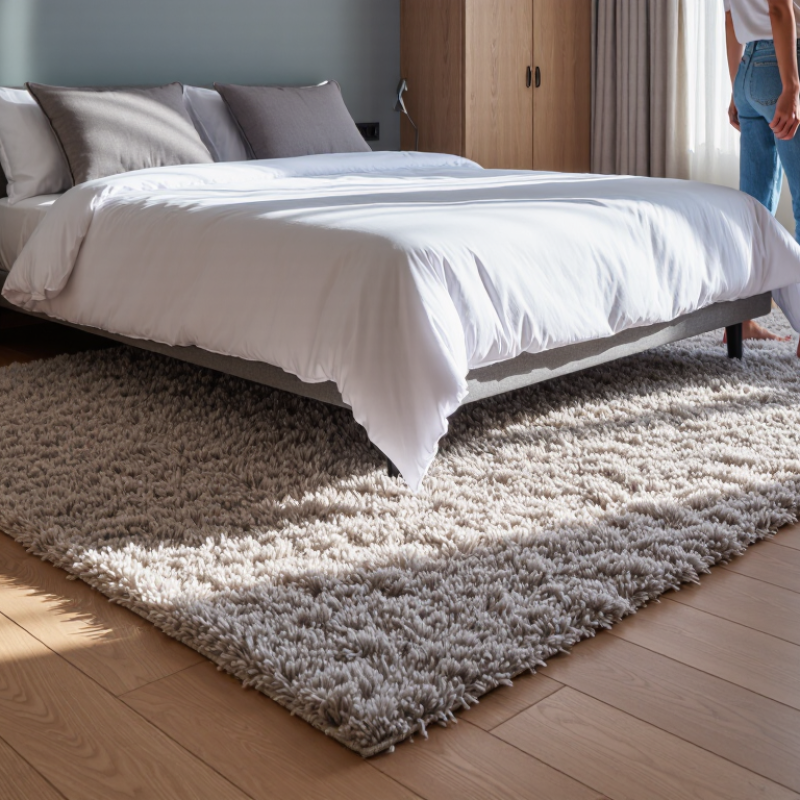
How to Choose the Best Bedside Carpet in 2026?

Understanding Bedside Carpet Types and Their Key Features

How to Choose the Best Bedside Carpet in 2026?

Understanding bedside carpet types starts with texture, fiber, and room conditions. Cut-pile carpets feel soft under bare feet and suit bedrooms with low traffic. Loop-pile carpets resist crushing, but their surface can feel firmer. Wool offers natural resilience and warmth, while nylon usually provides strong stain resistance. Polyester can feel plush, although heavy furniture may flatten it over time. A 2024 Grand View Research report valued the global carpets and rugs market at over 70 billion US dollars, reflecting continued demand for comfort, insulation, and interior styling.

Size matters more than many shoppers expect. A bedside carpet should extend beyond the bed edge, creating a stable landing zone beside each sleeper. Leave enough clearance for drawers and doors. Low-pile designs are easier to vacuum and reduce toe-catching risks. The U.S. Environmental Protection Agency recommends controlling indoor pollution sources and improving ventilation, so choose products with verified low-emission materials. The Carpet and Rug Institute’s Green Label Plus program evaluates emissions from carpet and installation products.

Avoid judging softness by touch alone. Some dense carpets feel luxurious in a showroom but trap dust near the bed. Others look plain yet clean easily. I have chosen plush textures before and regretted the maintenance. A washable cotton rug may suit a small bedroom, while a tightly woven wool rug can serve a larger space. Check backing, edge stability, cleaning instructions, and fiber recovery. The perfect choice may still need compromise.

Assessing Bedroom Size, Bed Layout, and Carpet Dimensions

How to Choose the Best Bedside Carpet in 2026?

Bedroom size should guide the carpet’s scale, not only its color or texture. Measure the bed, walking paths, and nearby furniture before shopping. In a compact room, a narrow runner beside each side of the bed can preserve movement space. In a larger bedroom, one wide carpet can extend beneath the bed and nightstands. This arrangement feels balanced and reduces exposed flooring around the sleeping area. Leave enough clearance for doors and drawers. A beautiful carpet can still become impractical.

Tips: Mark the intended carpet area with masking tape. Stand inside the outline. Does it feel crowded? Check both sides of the bed, especially when one side touches a wall. For a centered bed, equal carpet exposure usually looks calmer. For an off-center layout, matching runners may be more flexible. Measure twice. I still find that quick visual tests prevent many sizing mistakes.

Carpet dimensions should relate to the bed frame, not just the mattress. A king bed often needs a carpet wide enough to extend beyond both sides and reach the nightstands. Smaller beds may suit a two-by-three-meter carpet, depending on the room’s proportions. Keep at least the front legs on the carpet when a full under-bed fit is impossible. Low-pile materials usually allow doors and drawers to open more easily. However, dimensions are not absolute; doorway placement, flooring, and personal walking habits can change the best choice.

How to Choose the Best Bedside Carpet in 2026? - Assessing Bedroom Size, Bed Layout, and Carpet Dimensions

Bedroom Size Typical Bed Layout Recommended Bedside Carpet Size Best Placement Suggested Clearance Practical Notes
Small
Up to 10 m²
Single or narrow double bed positioned against one wall 60 × 90 cm or 60 × 120 cm
Approx. 2 × 3 ft or 2 × 4 ft
Place beside the accessible side of the bed 5–15 cm from the bed frame Choose a low-pile carpet so doors, drawers, and walking paths remain clear.
Medium
10–15 m²
Double or queen bed with one or two bedside tables 60 × 120 cm or 80 × 150 cm
Approx. 2 × 4 ft or 2.6 × 5 ft
Center one carpet with each bedside table, or use one longer runner 10–20 cm from the bed and 60–75 cm of walking space where possible A pair of matching carpets creates visual balance without covering too much floor.
Large
15–22 m²
Queen or king bed centered on the main wall 80 × 150 cm or 80 × 200 cm
Approx. 2.6 × 5 ft or 2.6 × 6.5 ft
Run the carpet parallel to the bed on each side 20–30 cm from the bed; keep at least 75 cm around main walkways Long runners provide comfortable landing space while preserving visible flooring.
Large or suite-style
Over 22 m²
King bed with wide bedside tables and generous circulation space 90 × 150 cm or 90 × 200 cm
Approx. 3 × 5 ft or 3 × 6.5 ft
Use two substantial runners or a coordinated pair of rectangular carpets 25–40 cm from the bed; maintain 75–90 cm for primary circulation Larger dimensions look more proportionate and reduce the risk of a visually undersized carpet.
Any size
Bed against a wall
Single-sided access or limited furniture arrangement 60 × 120 cm to 80 × 150 cm
Based on available floor width
Place the carpet only on the open side, aligned with the bedside table Leave 5–10 cm from walls and furniture where possible Avoid forcing a symmetrical layout when the room is designed for one-sided access.
Any size
Narrow walkway
Bed positioned close to a wall, wardrobe, or doorway 60–70 cm wide × 120–180 cm long Use a narrow runner along the usable side of the bed Keep 60 cm or more for comfortable passage; avoid blocking doors A non-slip backing or rug pad improves stability in high-traffic areas.

Measurements are general planning guidelines. Before purchasing, measure the bed frame, bedside furniture, door swing, heating vents, and available walking space.

Choosing Materials for Comfort, Durability, and Easy Maintenance

A bedside carpet should feel gentle under bare feet, yet survive daily use. In 2026, material choice matters more than decorative patterns. Wool offers natural warmth and resilience, making it comfortable during cold mornings. However, it can shed at first and may need professional cleaning. That is not always convenient.

Polypropylene is practical for busy bedrooms. Its fibers resist many common stains and dry quickly after careful spot cleaning. It usually costs less than wool, but it may feel less luxurious. Cotton feels soft and breathable, though it can flatten or shift without a firm backing. I once underestimated this problem. A beautiful carpet became a tripping concern beside the bed.

Look closely at the pile height and backing. A low or medium pile is easier to vacuum and less likely to trap dust near sleeping areas. Dense fibers feel pleasant, but they can hide crumbs and require slower cleaning. Choose a backing that grips the floor without damaging it. Test a small sample against your skin first. It sounds simple. It helps.

For maintenance, check the care label before buying. Use a vacuum with gentle suction and treat spills quickly with a clean, damp cloth. Avoid soaking the carpet, especially over wood flooring. If you have allergies, washable synthetic fibers may be more practical than delicate natural materials. Still, no material stays perfect forever. Comfort, durability, and maintenance will always involve trade-offs.

How to Choose the Best Bedside Carpet in 2026?

Comparing materials for comfort, durability, and easy maintenance

Ratings use a practical 1–5 scale, where 5 is the strongest performance. Wool offers excellent softness and resilience but needs more careful cleaning. Nylon provides the best overall balance for high-traffic bedside areas, while polypropylene is highly stain-resistant and easy to maintain. Cotton feels comfortable but generally has lower durability and cleaning performance.

Comparing Colors, Patterns, and Styles with Bedroom Decor

Choosing a bedside carpet in 2026 means matching color, pattern, and texture with your bedroom decor. Warm beige, muted terracotta, and soft olive can support wood furniture and linen bedding. Cool gray works better with metal frames and blue accents. The 2024 Color Marketing Group forecast emphasizes nature-inspired tones, but personal lighting still matters. A sample may look calm at noon and muddy at night.

Patterns should repeat one small bedroom detail. For example, a narrow geometric line can echo a headboard seam or bedside lamp shape. Avoid oversized prints beside heavily patterned wallpaper. They compete visually. A low-pile carpet suits modern rooms and rolling furniture, while a deeper pile creates a softer, more traditional mood. The U.S. Environmental Protection Agency notes that indoor pollutant levels can be two to five times higher than outdoors. Regular vacuuming remains essential, especially near the bed.

Tips: Place the carpet under the front two-thirds of the bed, leaving a comfortable border on both sides. The 2023–2024 American Pet Products Association survey reports that 66% of U.S. households own a pet, so stain-resistant, washable materials deserve serious attention. I prefer testing samples for three days. That may seem excessive, but bedroom colors change dramatically under warm bulbs. My first choice is not always right. A slightly imperfect match can feel more natural than a perfectly coordinated room.

Checking Safety, Budget, and Installation Requirements

How to Choose the Best Bedside Carpet in 2026?

Checking Safety, Budget, and Installation Requirements

A bedside carpet should feel secure during the first sleepy step each morning. Choose a low-pile surface that does not catch toes or trap too much dust. A certified non-slip pad can reduce sliding, especially on smooth wood or tile floors. Check the backing regularly. It can curl after cleaning or seasonal humidity changes. Measure twice. Leave enough clearance for drawers, doors, and the bed frame. A raised edge beside a doorway is a small hazard that is easy to miss.

Build the budget around the complete installation, not just the carpet price. Include the pad, delivery, cutting, floor preparation, and possible replacement. Natural fibers may feel comfortable, but some require careful cleaning and can cost more over time. Synthetic fibers often offer easier maintenance, though quality varies. I once chose a thicker rug for warmth and regretted it when the nightstand became unstable. That mistake changed how I judge comfort. Softness is not the only measure.

Installation depends on the floor beneath the carpet. Remove grit, repair uneven boards, and let a damp-cleaned floor dry fully before placing the rug. For heated flooring, confirm that the carpet and pad allow safe heat transfer. In a rental home, check permission requirements before using adhesive strips. Test the rug for several days, especially around the bed corners. Watch for curling, odor, or movement. A sample may look perfect in daylight but feel different beside a bed at night.

S O C I A L 

  • Facebook
  • Instagram
  • Pinterest

©2022 by LaFata Cabinets. Proudly created with Wix.com

bottom of page