
10 Cabinet Hinge Buying Tips for Global Buyers
Buying a Cabinet Hinge for international projects requires more than comparing prices online. Door weight, opening angle, overlay size, material, finish, and adjustment range can change the result completely. A hinge that works well on a light bedroom door may fail on a wide oak panel. Small errors become expensive after shipping, installation, and replacement.
Cabinet hardware consultant Richard W. Bales offers a useful reminder: “A hinge is small, but its adjustment determines the whole door.” Buyers should examine load capacity, cup diameter, screw quality, corrosion resistance, and soft-close performance. Ask for technical drawings and sample units before placing a large order. Check whether the supplier provides installation instructions, replacement parts, and stable packaging. These details reveal practical experience, not just polished product photographs. Certification requirements may also differ between markets, so confirm documentation with qualified local professionals.
Measurements deserve patience. A 2-millimeter mistake can create an uneven reveal across an entire kitchen. Test the hinge on the actual door material. Compare performance in warm, humid, or frequently used spaces. Stainless steel may suit demanding environments, while plated steel can fit controlled indoor applications. Still, specifications do not tell everything. I have seen attractive hinges disappoint because their adjustment screws stripped during final alignment. That possibility is easy to overlook. The following ten buying tips help global buyers compare suppliers carefully, reduce avoidable risks, and choose a Cabinet Hinge that performs reliably beyond the first installation.
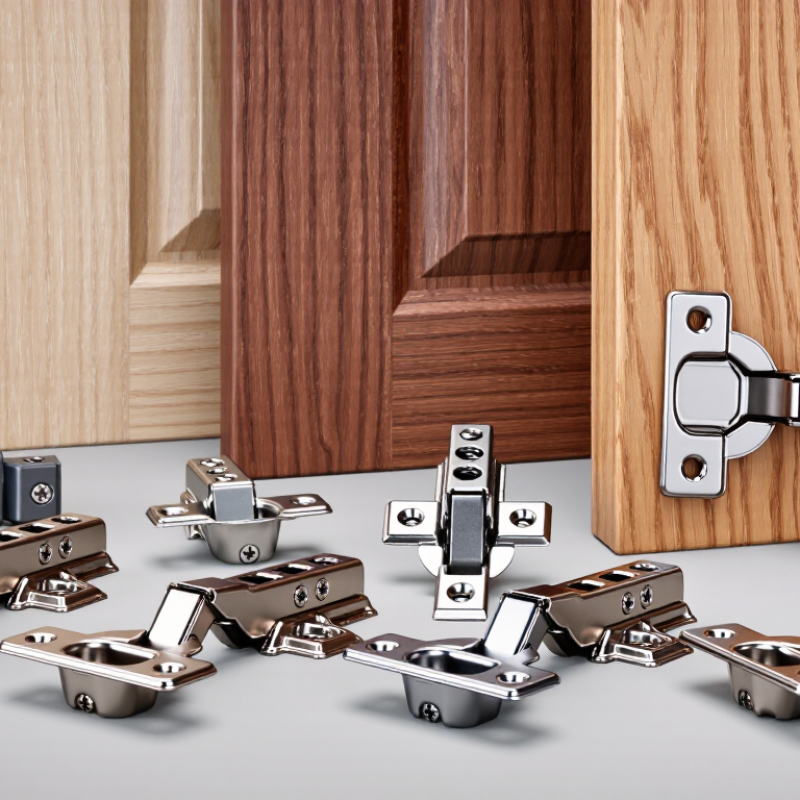
Types of Cabinet Hinges and Their Functional Differences
Cabinet hinges control more than door movement. They affect alignment, noise, load capacity, and service life. The 2024 Houzz U.S. Kitchen Trends Study found that 76% of renovating homeowners upgraded their cabinets. This signals strong demand for reliable hardware. Global buyers should match hinge type with cabinet construction, door weight, and opening frequency.
Full-overlay hinges cover the cabinet frame almost completely. They suit modern kitchens with continuous door lines.
Half-overlay hinges share one frame edge between two doors.
Inset hinges place the door inside the opening, requiring tighter installation accuracy.
Concealed hinges offer cleaner styling and adjustable alignment. Soft-close models reduce impact, but their dampers may perform poorly in cold warehouses or under excessive loads. Pivot hinges support wide, tall doors, while heavy-duty hinges suit frequent commercial use.
EN 15570 and ANSI/BHMA A156.9 provide useful performance references, although local testing conditions can differ.
Tips: Request load ratings, cycle-test results, and adjustment ranges before ordering.
Check whether screws, mounting plates, and drilling specifications match your panels.
A 35-millimeter cup is common, but it is not universal.
Confirm overlay measurements with a physical sample.
I have seen attractive hinges fail because the door was heavier than the supplier’s estimate. Another mistake is testing soft-close action only once. Repeat testing matters. The Freedonia Group’s cabinet industry research identifies remodeling as a major demand driver, but replacement projects often reuse existing carcasses. That makes mounting compatibility as important as appearance.
How to Match Hinge Design with Cabinet Construction
Cabinet hinge selection should begin with construction, not appearance. For frameless cabinets, use concealed hinges with mounting plates fixed directly to the side panels. Face-frame cabinets need hinges designed for the frame’s front edge. Inset doors require precise adjustment, because even a small gap error becomes visible around the entire door. The 2024 Houzz U.S. Kitchen Trends Study reported shaker doors as the leading style, chosen in 61% of renovated kitchens. That popularity makes compatible hinges important for consistent reveals.
Measure the door thickness, overlay, cup diameter, and cabinet opening angle before ordering. A heavy solid-wood door may need more hinges than a lightweight plywood door. Particleboard also demands careful screw selection and pilot-hole control. For wide doors, soft-close mechanisms can reduce impact, but they may require greater installation accuracy. I have seen buyers match the hinge to the door while ignoring the cabinet side panel. That mistake causes loose mounting and uneven movement. It is easy to overlook.
Use the ANSI/KCMA A161.1 performance standard as a quality reference for cabinet durability, but do not treat compliance as a substitute for fit testing. Test a sample cabinet with the actual door, screws, and hinge plate. Check the closing speed after repeated cycles. Construction methods vary between factories, even within one market. A hinge that performs well on a 16-millimeter panel may fail on a thinner board. Small differences matter.
| Tip | Cabinet Construction | Recommended Hinge Design | Key Technical Data | What Global Buyers Should Confirm |
|---|---|---|---|---|
| 1 | Full-overlay cabinet doors that cover most of the cabinet side panels. | Concealed full-overlay hinge with a straight mounting arm. | Typical cup diameter: 35 mm; common cup depth: approximately 11–12 mm; opening angle commonly ranges from 100° to 110°. | Measure the door overlay on the hinge side and confirm whether the hinge is intended for full-overlay installation. |
| 2 | Half-overlay doors sharing one cabinet partition or center panel. | Concealed half-overlay hinge with a cranked mounting arm. | The hinge arm offsets the door from the cabinet side. The required offset depends on panel thickness, door width, and the number of doors sharing the panel. | Verify the required overlay per door rather than selecting a hinge only by the visible door style. |
| 3 | Inset doors positioned inside the cabinet opening and flush with the front frame or cabinet edges. | Concealed inset hinge with a more strongly cranked arm or dedicated inset geometry. | Requires accurate gap control. A practical door-to-cabinet clearance is often about 2–3 mm, but the exact value depends on door thickness and construction tolerances. | Check the internal opening, door thickness, drilling position, and required clearance before approving samples. |
| 4 | Frameless cabinets made from particleboard, MDF, or plywood panels. | European-style concealed hinge mounted to a clip-on or screw-on mounting plate. | Common mounting plate heights are approximately 0, 3, or 6 mm. Plate height influences door overlay and adjustment range. | Match the mounting plate to the cabinet system and confirm screw holding strength in the selected panel material. |
| 5 | Face-frame cabinets with a front frame behind the door. | Face-frame hinge, compact hinge, or concealed hinge combined with a suitable adapter plate. | The hinge must bridge or clear the face frame. Frame width, frame thickness, and door overlay determine the required hinge configuration. | Provide face-frame dimensions and confirm whether the mounting plate is designed for the frame construction. |
| 6 | Thick, wide, or heavy doors made from solid wood, plywood, glass-frame assemblies, or moisture-resistant board. | Heavy-duty concealed hinge with reinforced cup area and an appropriate number of hinges. | For a typical 600–900 mm tall door, three hinges are often used; taller or heavier doors may require four or more. Actual quantity depends on door mass and hinge load rating. | Use the hinge maker’s tested load data, calculate door weight, and confirm the recommended hinge spacing instead of relying only on door height. |
| 7 | Glass doors, aluminum-frame doors, or doors where drilling a 35 mm cup hole is unsuitable. | Glass-door hinge with clamps, adhesive mounting, or a dedicated aluminum-frame profile. | Glass thickness commonly falls within approximately 4–6 mm for many cabinet applications, while aluminum-frame systems vary by profile. | Confirm glass thickness, edge treatment, frame profile, mounting method, safety requirements, and maximum supported door size. |
| 8 | Kitchen, bathroom, utility-room, or other cabinets exposed to humidity and cleaning chemicals. | Corrosion-resistant hinge made from nickel-plated steel, stainless steel, or another verified protective finish. | Standard indoor hinges may not be suitable for high-humidity locations. Stainless steel grades and coating performance should be verified through documentation or testing. | Request salt-spray or corrosion-test information where relevant, and check compatibility with local cleaning agents and installation environments. |
| 9 | Cabinet doors requiring quiet closing and controlled movement in residential, hospitality, or office interiors. | Soft-closing concealed hinge with an integrated or compatible damper. | Soft-close performance depends on door mass, closing speed, temperature, hinge quantity, and adjustment. Some hinges allow the damper to be switched off. | Test the complete door assembly for closing force, noise, alignment, and performance after repeated opening and closing cycles. |
| 10 | Cabinets intended for different markets, installers, or production lines with varying tolerances. | Adjustable concealed hinge with three-way adjustment: side, depth, and height. | Typical adjustment ranges are approximately ±2 mm laterally, ±2 mm in depth, and ±2 mm vertically, although values vary by design. | Confirm mounting-hole dimensions, screw pattern, adjustment tools, installation instructions, testing standards, and replacement-part availability. |
Key Materials, Finishes, and Durability Factors to Compare
10 Cabinet Hinge Buying Tips for Global Buyers
Material choice sets the hinge’s working life. Compare steel, stainless steel, and zinc alloy before comparing prices. Stainless steel suits humid kitchens, while plated steel may fit controlled indoor spaces. Check the base metal, thickness, load rating, and screw-hole strength. Thin metal can distort under heavy doors.
Finish is not decoration alone. Nickel and chrome finishes need consistent coverage, especially around edges and moving joints. Powder coatings can resist scratches, but poor pretreatment may cause early peeling. ISO 9227 salt-spray testing helps compare corrosion resistance, but it does not predict exact service life. The NACE IMPACT study estimated global corrosion costs at US$2.5 trillion, or 3.4% of global GDP. That makes corrosion testing commercially important. Ask for cycle-test results, adjustment range, hinge torque, and door-weight limits. Check EN 1670 corrosion grades where relevant. Inspect samples for rough edges, loose screws, uneven coating, and noisy movement. Small details matter. Consider salt air, cleaning chemicals, temperature changes, and daily opening frequency. Request technical sheets, test methods, and production-batch traceability. I have seen attractive finishes hide weak substrates. A low price can still become expensive after repeated replacements. One test never tells the whole story. Compare evidence, not promises.
Installation Requirements, Adjustability, and Compatibility Checks
Cabinet hinge buying requires more than matching visible dimensions. Installation conditions must be checked before placing a large order. Measure door thickness, overlay, cup diameter, cup depth, and screw positions. Confirm the cabinet frame material and available mounting space. On-site experience shows that a hinge may fit one sample but fail during production. That mistake can delay an entire shipment.
Tip 1 Confirm installation requirements early. Ask for technical drawings, drilling distances, screw specifications, and recommended tools. Check whether installers need clip-on mounting or fixed screws. Review the opening angle and clearance around nearby doors. A small clearance error can cause rubbing, uneven gaps, or damaged edges. Test several samples on the actual cabinet material, not only on a workshop board.
Tip 2 Prioritize adjustability and compatibility. Look for practical height, side, and depth adjustment. These features help correct minor cabinet or door variations. However, adjustment range is not unlimited. Confirm load capacity, door weight, overlay style, and frame construction together. Check corrosion resistance when cabinets may face humidity or frequent cleaning. Ask for installation instructions and inspection records. I have seen buyers overlook screw length, then discover weak fixing after delivery. Rechecking this detail feels repetitive, but it prevents avoidable claims. Compatibility should also be verified with the cabinet’s existing plates, drilling system, and production tolerances.
How to Evaluate Suppliers, Pricing, Certifications, and Order Terms
10 Cabinet Hinge Buying Tips for Global Buyers
A reliable supplier should explain steel grade, plating thickness, opening angle, load rating, and cycle-test results. Ask for samples from regular production, not specially prepared pieces. Check screw alignment, mounting-hole tolerance, closing force, and visible burrs. Small defects matter. A hinge may look excellent but fail after repeated use. ISO’s 2023 Survey recorded more than 1.2 million ISO 9001 certificates worldwide, yet certification alone does not prove hinge quality. Verify the certificate’s scope, issuing body, factory address, and current validity.
Compare total landed cost, not only the unit price. Include tooling, packaging, inspection, inland transport, duties, insurance, and payment charges. Request a price-break table for different quantities and clarify whether raw-material changes can alter pricing. “Low cost” can be misleading. The World Bank’s 2023 Logistics Performance Index shows significant differences in customs and infrastructure performance across markets. Build realistic delivery buffers, especially for ocean freight. UNCTAD reports that over 80% of global merchandise trade by volume moves by sea.
Order terms should define drawings, approved samples, tolerances, AQL limits, carton markings, replacement rules, and inspection rights. State the Incoterm and the exact shipment point. Confirm lead time begins after deposit, sample approval, or artwork approval. These details are often misunderstood. A written warranty should cover corrosion, spring failure, and abnormal loosening. Keep certificates, test reports, batch numbers, and inspection photographs in one file. No supplier file is ever perfect; recheck critical evidence before each repeat order.
10 Cabinet Hinge Buying Tips for Global Buyers
Recommended 100-point supplier evaluation framework covering product quality, compliance, commercial terms, and supply reliability.
The highest weights are assigned to hinge performance, supplier quality systems, certifications, pricing transparency, and delivery reliability. Buyers can adjust these weights according to project requirements, destination-market regulations, and order volume.
Article Source:


Fall into Function: How LaFata Cabinets Prepares Your Kitchen for the Cozy Season


Back-to-School Kitchen Refresh: How LaFata Cabinets Can Help You Stay Organized This Fall


